

Master's Degree in Business Administration
Strengthen your leadership skills with a global perspective on business strategy and gain advanced knowledge in economics, finance, and international markets.
Apply for a scholarship


Format 100% online

Start date January 2027

Language English

Duration 18 months (5 semesters)
Become the strategic professional businesses are looking for
The Master’s Degree in Business Administration (MBA) is designed to meet the demands of today’s competitive job market and provide you with expert knowledge in economics, finance, and international business models. In a globalized world with constant digital transformation, our MBA program combines a solid theoretical base with the tools you need to analyze complex business environments and drive innovation.
Throughout the MBA, you will develop a comprehensive perspective on organizational structures and strategic areas, from finance and marketing to operations and technology. You will also gain leadership skills to motivate teams, manage change, and make data-driven decisions.
The program offers four concentrations that allow you to tailor your education to your professional goals. You can choose from the following:
- Global Management
- Business Analytics
- Digital Marketing
- Finance
These educational pathways increase your employability and help you stand out in highly dynamic global markets.
What will you learn in the online Master’s Degree in Business Administration program?
With your online MBA degree, you will master the theoretical and practical tools needed to succeed in today’s global business world and develop a profile as a leader who is prepared to guide teams, drive innovation, and make strategic decisions. In short, you will be able to:
- Analyze the complexity of modern business administration and turn ideas into actionable plans and innovative practices.
- Develop advanced knowledge of international markets and global trends.
- Master the principles of international financial and tax systems.
- Design and implement strategies across key business areas.
- Put digital tools to use in international markets.
- Develop skills to lead change and improve organizational performance.

Why get your Master’s Degree in Business Administration at MIU?
A Master of Business Administration from MIU elevates your professional career and prepares you for today’s modern business world. Getting your MBA degree with us means:
- A U.S.-accredited degree that meets the demands of the U.S. and global market.
- Access to high-quality networking that connects you with students from around the world, expanding your horizons and increasing your opportunities.
- A flexible methodology that includes onboarding, personalized tutoring, live and recorded classes, around-the-clock technical support, and access to all our online resources.
- Affordable, barrier-free pricing that makes quality education accessible.

Format
Our U.S. MBA is 100% online to give you maximum flexibility. You can study from anywhere in the world, ideal for professionals looking to complete their MBA online.
Online
Tuition
Per credit
Fees
Start date
January 2027
Language
English
Duration
18 months (5 semesters)
Application fee
- Domestic Students: 50 USD/ for International Students:150 USD
- Foreign Credential Evaluation (FCE): 150 USD
- Graduation Fee: 400 USD
(*) Does not include the graduation fee (USD 400)
Highlights
- Accredited by DEAC.
- Live and recorded classes.
- Maximum flexibility.
- Classes in English.
- U.S. degree.
Scholarships
See all the scholarships we have available for those who qualify, along with our no-interest payment plans. If you have any questions about your personal situation, we are here to help.

Online MBA Program Overview
36 Credits
At MIU, academic terms last 15 weeks, which is equivalent to one semester in the U.S. education system. We offer three intakes per year: January to May, May to August, and August to December. Additionally, at the start of the program, you will choose the concentration that best aligns with your professional goals.
Discover all the online MBA courses below
1st semester
Managerial Accounting
3 Credits
Marketing in Diverse Environments
MBA 510
3 Credits
Operations and Logistics
3 Credits
2nd semester
Innovation Management
3 Credits
Global Finance
3 Credits
Strategic Management
3 Credits
3rd semester
Leadership and Change Management
3 Credits
1 Concentration course
4th semester - Choose your Concentration
In this fourth semester, you will complete the remaining Two courses in your chosen concentration
Global Management Concentration
Business Information System
3
International Business
3
Financial Markets and Instruments
3
Digital Marketing Plan
3
Business Analytics Concentration
Technological Fundamentals for Data Processing
3
Big Data Analysis for Business
3
Advanced Data Visualization
3
Digital Marketing Concentration
Digital Marketing Plan
3
Advanced Customer Analytics
3
Social Media
3
Finance Concentration
Cash Management
3
Investment Evaluation
3
Financing Decisions
3
5th semester
Master of Business Administration Capstone Project
6 Credits
Última revisión realizada: 20/10/2026
This course introduces you to management control and budgeting activities within companies. Finance encompasses all measurable business indicators used by both internal managers and external stakeholders to make economic decisions, making it essential knowledge for any professional or executive. You will cover financial and cost accounting, as well as the most commonly used tools for analyzing accounting information. You will develop financial planning through Excel, including projected balance sheets and income statements based on assumptions and current data. The course also examines tools typically used to support investment and financing decisions, management control, and the role of corporate finance in an increasingly globalized environment.
Última revisión realizada: 20/10/2026
This course addresses marketing in a constantly changing context, laying the foundation for your creative problem-solving and innovative decision-making. You will cover key marketing theories, tools, and strategies, with a particular focus on the Internet and emerging technologies as central elements in marketing management. These strategies aim to create customer value and efficiently manage long-term relationships. You will also incorporate marketing management concepts and competitive intelligence through information systems, as well as techniques for gathering and analyzing data to support strategic decisions, optimize relational marketing, and guide segmentation and positioning choices.
Última revisión realizada: 20/10/2026
This course provides you with a strategic perspective on business operations, introducing concepts, experiences, methodologies, and tools to develop your skills for efficient operations and logistics management. You will explore methodologies for capturing, evaluating, and selecting ideas that drive continuous improvement and sustainable competitive advantage. You will learn tools and approaches for aligning organizational strategic objectives with operations and logistics, promoting consistent and coherent business management. The course equips you with the knowledge and competencies to manage operational and logistical processes effectively, emphasizing techniques and methodologies that foster excellence in strategic organizational management.
Última revisión realizada: 20/10/2026
This course equips you with the skills and competencies to lead organizational change toward an innovative culture, a key factor in developing business strategies that drive success and growth. You will examine how to foster innovative environments within organizations and how innovation translates into organizational transformation, reshaping corporate vision and strategy, creating new market approaches, and enhancing competitive positioning in a globalized world. Innovation is recognized as a crucial driver of value creation and organizational capability. You will develop and apply new management models based on innovation, capable of addressing challenges posed by increasing socio-economic uncertainty.
Última revisión realizada: 20/10/2026
This course analyzes the evolution of corporate finance in a context shaped by financial market innovation, technological advancements, and economic globalization. You will explore advanced concepts, theories, techniques, and methods in finance and financial planning, integrated into corporate strategy and financial management. You will analyze the relationship between strategic management and finance, as well as interactions with the international financial environment, followed by analyses of investment and financing decisions over time. Finally, you will present the financial plan as a synthesis of the investment and financing process, quantifying your company’s strategic plan, with particular attention to FinTech and its implications in today’s business landscape.
Última revisión realizada: 20/10/2026
The primary goal of this course is to help you understand the importance of a clearly defined, communicated, and articulated corporate strategy, and how it relates to general and functional management. You will study various strategic planning tools to select the most appropriate based on context and business conditions. The course emphasizes the relevance of aligning strategy with economic, technological, and global environments, anticipating external variables with the greatest potential impact, and adapting management and strategy as conditions evolve.
Última revisión realizada: 20/10/2026
This course emphasizes human talent management as a differentiating factor that drives motivation and shapes organizational culture. You will explore change and knowledge management as key challenges for modern businesses, focusing on strategies related to employee lifecycle management, knowledge management, and organizational change. You will learn practical and effective tools for leading teams and managing conflict to strengthen organizational adaptability to global and digital transformations.
Última revisión realizada: 20/10/2026
This course serves as an introduction to data-driven governance. You will contextualize Business Intelligence strategies within decision-support systems, showing how increased data availability and comprehensive use advance ERP systems, becoming essential to competitive strategy. You will learn the fundamentals of information systems, including key elements for ERP design and implementation, from architecture to software options. The course concludes with an analysis of risks associated with data-driven governance and ethical considerations in designing and implementing data-centric management strategies.
Última revisión realizada: 20/10/2026
Globalization presents both challenges and opportunities, including the need for a more balanced and sustainable global economic model. Digitalization enhances globalization and is essential even for locally operating companies. You will cover the basics of international business from a digital perspective, identifying necessary adjustments to ensure sustainable operations. You will analyze global and local business contexts, review the history of the digital era, assess its organizational impact, and explore innovation as a source of differentiation. You will also examine challenges of digitalization and innovative business models.
Última revisión realizada: 20/10/2026
This course provides you with a comprehensive view of financial markets, their functioning, risk levels, and expected returns. You will study market activities, assets, major participants in fixed-income and equity markets, and the use of derivatives in corporate financial management. You will explore international dynamics, including borderless business practices and economic growth imperatives. The course also covers crisis management, mergers, integration, expansion, internationalization, and emerging political-economic areas critical to the current global economic landscape.
Última revisión realizada: 20/10/2026
This course equips you with essential tools for strategic and operational marketing, focusing on data collection and analysis for business decision-making. You will learn the fundamentals for planning a complete digital marketing and communication strategy, outlining sequential stages to achieve defined objectives. The course covers all phases of a digital marketing plan, providing a framework that connects strategy with operational execution.
Última revisión realizada: 20/10/2026
This course covers IT and database fundamentals essential for understanding business intelligence solutions. You will learn technological principles and technical language to collaborate effectively with specialists and project teams. You will explore technology infrastructure (hardware platforms, operating systems, enterprise applications, local/global/wireless networks, network security, and cloud computing) and databases (objectives, functionality, architecture, and models), providing a solid foundation for managing and analyzing business information.
Última revisión realizada: 20/10/2026
This course provides you with a comprehensive introduction to data science applied to business. The first module covers methodologies and project lifecycle stages, offering a conceptual framework for data-driven science. The second module focuses on technical skills, including data analysis and modeling, key machine learning concepts and techniques, and the application of NLP for analyzing unstructured data from text and other complex sources.
Última revisión realizada: 20/10/2026
This course develops data visualization principles and techniques to understand information through graphical representation and communicate insights effectively within organizations. You will learn effective visualization strategies, extract relevant information, and select appropriate graphical formats. You will explore innovative visualization tools, including dashboard creation and storytelling techniques to facilitate clear and persuasive data communication.
Última revisión realizada: 20/10/2026
This course provides you with essential tools for both strategic and operational marketing management, with a focus on gathering and analyzing information to support your business decisions. It serves as a foundation for your comprehensive digital marketing and communication strategy planning, outlining sequential steps for you to achieve defined objectives. The course covers all phases of a marketing plan, clarifying the concept of marketing, differentiating between strategic and operational marketing, and placing digital marketing within the broader context of integrated online and offline actions.
Última revisión realizada: 20/10/2026
This course focuses on customer-oriented marketing intelligence, covering the entire process from gathering customer data to its strategic application. You will explore strategic customer segmentation, investment prioritization, advanced segmentation methods, metrics, and learning processes to optimize targeting. You will analyze the customer lifecycle, customer value, and future profitability (Customer Lifetime Value), and learn how to incorporate this information into marketing plans. You will also examine RFM (Recency–Frequency–Monetary) models, methodologies for identifying optimal business actions, and processes for measuring results at both strategic and tactical levels. Additionally, you will develop predictive models and understand their benefits for marketing strategy.
Última revisión realizada: 20/10/2026
This course introduces you to Web 2.0 tools for developing new channels of communication and interaction between businesses and customers. You will study social media strategy, integrating networks into business objectives, achieving measurable outcomes, and evaluating performance. You will learn about leisure and professional social networks, communities of practice, and social media formats such as blogs, content syndication, and podcasts. Platform-specific strategies are also covered, including Facebook for promotions and advertising, X for advertising formats and amplification, LinkedIn for networking and specialized advertising, and visual platforms like YouTube for promotional purposes. You will place special emphasis on measuring social media results and calculating ROI.
Última revisión realizada: 20/10/2026
The treasury department manages the company’s cash inflows and outflows, enabling effective financial planning. Complexity varies by organization size, international presence, and sector. You will master cash management, a key component of building financial capabilities within the organization.
Última revisión realizada: 20/10/2026
This course focuses on evaluating strategic investment projects with long-term impact, including fixed-asset acquisitions and current asset investments. You will study criteria and methodologies to determine investment feasibility and profitability within a strategic framework.
Última revisión realizada: 20/10/2026
This course explores your company’s financial structure in depth, interpreting internal and external information to provide continuous financial diagnostics. You will examine the impact of financial decisions on strategic objectives and learn criteria for making investment and financing decisions in dynamic, competitive, and uncertain environments.
Última revisión realizada: 20/10/2026
This course requires you to complete a series of progressive exercises in a specialized area of International Business Administration, integrating analysis, synthesis, and evaluation of research methods. You will complete a distinctive final project demonstrating your ability to synthesize theoretical knowledge, professional application, ethical implications, and fundamental research methods within your chosen specialization.
You will conduct evaluations including peer-reviewed journal articles, case studies, research studies, real-world scenarios, reports, seminar proceedings, theories, practices, postulates, and other academic sources relevant to your program’s specific area of focus.
Boost your executive profile and lead in global environments
During the Master of Business Administration program, you will become an expert in strategic management and data analysis applied to corporate governance, aiming to optimize processes and confidently lead decision-making. Some of the key tools and approaches you will cover include:
- Management tools: Financial analysis and business optimization using Excel, Excel Solver, ChatGPT, Power BI, Tableau, and GRETL. Additionally, you will boost managerial and commercial productivity with Google Analytics, HubSpot, and Copilot.
- Practical approach: Real-world business case studies to develop strategic solutions and lead teams in demanding corporate environments.
- Strategy and analytics: Organizational diagnostics and workflow automation through the strategic use of data and artificial intelligence applied to management.







5 Stars in the QS Ranking
At MIU City University Miami, we hold a 5-star distinction in the QS Stars ranking, which endorses the quality of our online education, our practical approach, and our commitment to the professional development of our students


Make decisions that drive impact
In addition to your program, you will have the opportunity to earn the ‘Leading People’ Diploma from the Harvard ManageMentor program. This module is designed to build leadership skills that inspire teams, foster high-performance cultures, and drive strategic decision-making. This training is essential for those seeking to lead with impact in demanding professional environments, allowing you to boost your executive profile with skills applicable from day one.

Mentorship MIU: From Idea to Real Business
As a student in the Master’s in Business Administration, you’ll have access to MIU Mentorship, a high-impact, hands-on program designed to help you move from vision to action and take your project to the next level. Over four months, you’ll receive personalized guidance and one-on-one support from an industry-expert mentor to refine your proposal, make clearer decisions, and accelerate your progress.
At the start of each semester, we select an exclusive group of students to take part in this transformative experience. Don’t let your idea stay on paper—bring it to life with MIU’s support.

Career opportunities for the Master’s Degree in Business Administration
With your Master’s Degree in Business Administration from MIU, you will have the skills and competencies to stand out as a well-rounded professional. Some of the most relevant areas you can work in are:
- Business management (public or private): Develop projects and lead the teams involved.
- International organizations: Lead strategically with a global perspective.
- Marketing and communications: Play a key role in decision-making and the exploration and analysis of new markets for your company.
- Financial consulting: Help businesses manage their resources and make important financial decisions.
- Strategic consulting and business development: Advise organizations on how to achieve long-term success.
- Business planning
- Global strategic management
- Executive leadership and internal control
- Data analytics and business intelligence
- Digital transformation management
- Digital ecosystem leadership
- Financial decision making
- Innovation and business model adaptability
(*) Source: U.S. Bureau of Labor Statistics (BLS). Median annual wage in the U.S. for management analysts.
(**) Source: U.S. Bureau of Labor Statistics (BLS). Projected employment growth (2023–2033) for management analysts.
AVERAGE SALARY
EMPLOYABILITY
Frequently asked questions about our MBA program
MIU City University Miami’s MBA program is a U.S. accredited through the Distance Education Accrediting Commission (DEAC), which reflects the highest standards and professional recognition across the United States. MIU is licensed by the Florida Department of Education and authorized by FL-SARA to provide high-quality online education.
Currently, MIU offers flexible admission requirements, allowing experienced professionals to apply without submitting GMAT scores, focusing instead on your background and leadership potential.
No. You do need a bachelor's or master's degree, but it can be in any field. MIU welcomes students from diverse backgrounds looking to transition into leadership roles.
The MIU’s International MBA program lasts 5 semesters (18 months). We offer three intake periods per year in January, May, and August to suit your professional schedule without putting your progress on hold.
The MBA prepares you for management and leadership roles such as business manager, project manager, marketing manager, financial analyst, or business consultant, with the potential to grow into senior leadership positions over time.
MIU offers a scholarship program that may offer a significant portion of tuition, based on academic merit and professional background, with the goal of supporting diversity among our student body.
Yes. MIU offers a Spanish-language option that allows you to earn a U.S. degree and develop the skills needed for a global context while studying in your native language.
Yes. MBA graduates often see significant salary increases. Some report up to 33% growth. Plus, MIU’s $7,000 price point ensures a high return on investment compared to traditional universities.
Admission Requirements
You must provide the following to enroll in our MBA program:
- Bachelor’s or master’s degree diploma
- Copy of passport or national ID
- Completed application form
- Current resume
- Proof of English proficiency (required if you enroll in an English‑taught program)*
(*) If you live outside the U.S. or your native language is not English, please refer to the guide here for the relevant steps and assessments.

Learn about the experience of our graduates

My journey at MIU has been challenging yet rewarding. The program’s support and practical coursework in leadership, innovation, and strategy have helped me apply lessons to real-world business challenges while gaining diverse perspectives.
Experiences That Inspire


Keep learning:
MIU’s Continuing Education Courses do not count as university credits and are not transferable to other academic programs. They are designed solely for professional development and personal enrichment.

Corporate Finance
Optimize your company's financial management to gain a competitive edge.

Artificial Intelligence Applied to the Enterprise
Understand how artificial intelligence impacts business management and supports strategic decision‑making.

Data & Business Analytics
Make decisions based on strategic data analysis.

Leadership
Develop the emotional intelligence and decision-making skills needed to lead high-performing teams successfully.

Digital Project Management
Master the tools and methodologies to lead multidisciplinary teams and manage complex projects.

Digital Marketing & AI Applied to Marketing
Learn effective strategies to connect with your audience and grow your business.
Boost your career with international reach
If you want to take a global step forward in your professional journey, discover our networking event in Miami.
Miami International Week: Explore the world of innovation and entrepreneurship, connect with startups and leaders within the U.S. entrepreneurial ecosystem, and discover new ways of doing business.

Key dates
- Fall semester: September – December
- Enrollment: August
- Spring semester: January – May
- Enrollment: December
- Summer semester: May – August
- Enrollment: April

Licenses and Authorizations
DEAC (Distance Education Accrediting Commission)
MIU City University Miami is accredited by the DEAC. The Distance Education Accrediting Commission is recognized by the Council for Higher Education Accreditation (CHEA).

State License
MIU City University Miami is licensed by the Commission for Independent Education, Florida Department of Education, under license number #5359.

A Leader in Online Education
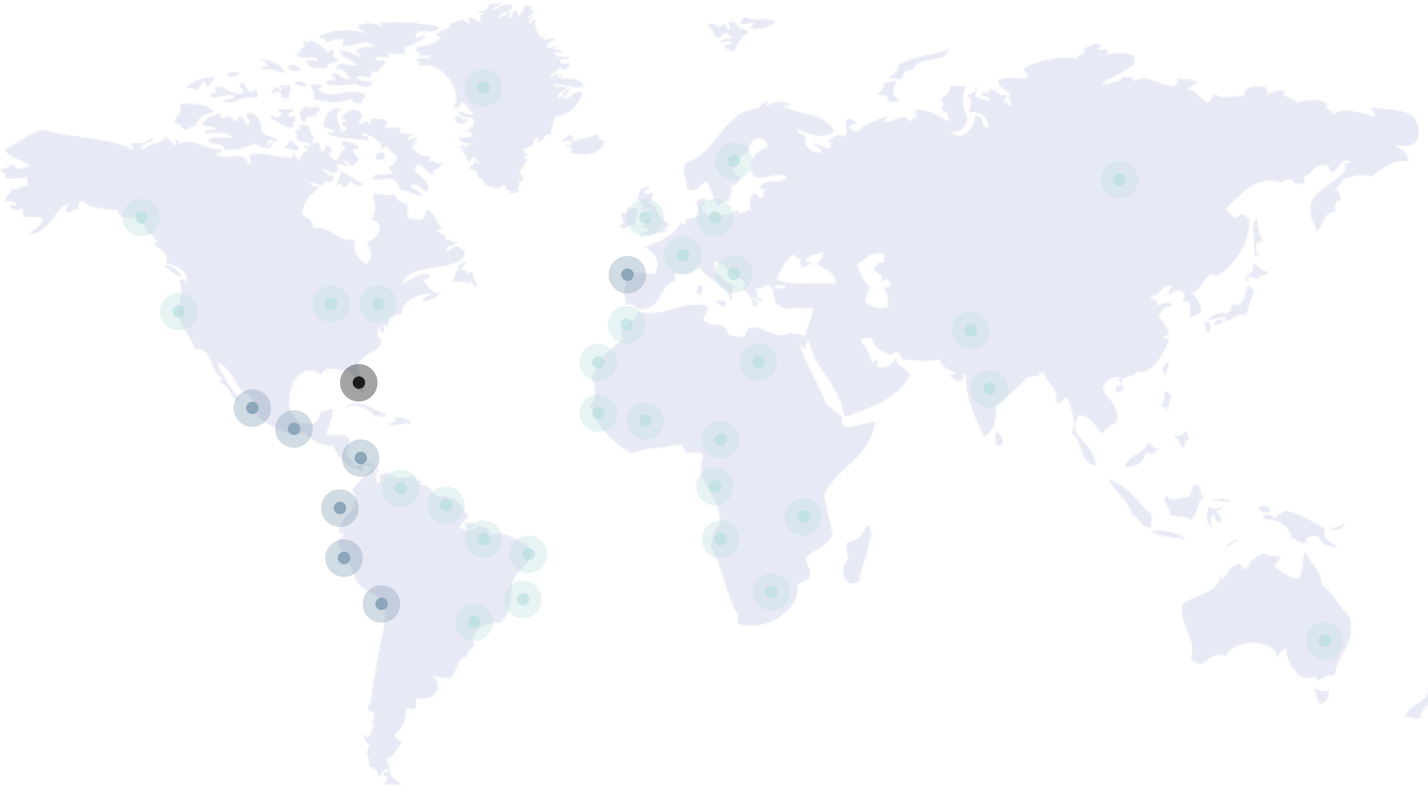
MIU City University Miami is part of PROEDUCA Universities, a leader in online education with over 15 years of experience. With more than 108,000 students across 90+ countries and a team of 3,000 highly qualified professors, we offer a proven learning system based on academic excellence and accessibility.
Countries
Students
Years of Experience

Request information
To apply for this master's program, you must hold a bachelor's degree.
$8,000*
$222 per credit