


International Master’s Degree in Business Administration
Enhance your leadership skills with a comprehensive overview of strategic corporate areas, gaining specialized knowledge in economics, finance, and international markets.
Apply for a scholarship


Format
Hybrid (English)
Online (Spanish)

Start date May 2026

US Degree Accredited

Language
English
Spanish
A profile for modern companies
This master’s program is designed to respond to the needs of today’s job market, providing you with expert knowledge of the economic and financial principles underlying different business models.
In the current context of growing internationalization, this master gives you the theoretical and practical training necessary to analyze different business environments at a global level.
You will gain an overarching vision of a company’s structure and key areas, and develop the leadership skills required to manage teams and make strategic decisions.
What will you learn during your Master’s in Business Administration?
Master the theoretical and practical tools necessary to build a successful career in different sectors of the business world. You will gain specialized knowledge in economics, finance, and international markets; specific skills in managing different business models; and a leadership profile capable of heading teams and making strategic decisions.
In summary, you will:
- Explore the complexities of business management.
- Acquire the practical skills to transform ideas into action plans and innovative practices.
- Develop advanced knowledge of international markets.
- Understand the general principles guiding international finance and tax systems.
- Learn to design and implement strategies in different business areas.
- Know how to use the necessary tools in international environments.
- Gain the skills to drive change within organizations.

Format
We offer this U.S. degree in an online or hybrid learning format to give you maximum flexibility. Study from anywhere in the world, or experience student life on our campus in Miami.
Online
Tuition
Per credit
Fees
Start date
May 2026
Language
Spanish
Duration
18 months (5 semesters)
Application fee
- Domestic Students: 50 USD/ for International Students:150 USD
- Foreign Credential Evaluation (FCE): 150 USD
- Graduation Fee: 400 USD
(*) Does not include the graduation fee (USD 400)
Highlights
- Accredited by DEAC.
- Live and recorded classes.
- Maximum flexibility.
- Classes in English or Spanish.
- U.S. degree.
Scholarships
See all the scholarships we have available for those who qualify, along with our no-interest payment plans. If you have any questions about your personal situation, we are here to help.

Hybrid
Tuition
Per credit
Fees
Start date
May 2026
Language
English
Duration
18 months (5 semesters)
Application fee
- Domestic Students: 50 USD/ for International Students:150 USD
- Foreign Credential Evaluation (FCE): 150 USD
- Graduation Fee: 400 USD
Additional fees
- Facility and Technology: 1,950 USD
- Campus Services: 2,100 USD
- I-20 Visa Fee ( International Students only): 250 USD
- Extracurricular activities: 1000 USD
Highlights
- Personalized academic advising.
- 24/7 e-learning platform.
- Discount on Metrobus card.
- On-campus work experience opportunities.
- Assistance getting a driver’s license.
- Executive campus and library.
Scholarships available
Scholarships and flexible financing with no interest or additional costs are available. In addition, our consultants are available to assist you in selecting the option that best suits your needs.
Career opportunities
AVERAGE SALARY
EMPLOYABILITY
Earning a master gives you a decisive competitive advantage in the job market. Become an expert in international business, capable of leading corporate processes in a variety of organizations and institutions. Improve your employability, increase your earning potential, and work for leading international organizations where you can advance your career in areas including:
- Strategic consulting and business development.
- Management and administration of public and private companies.
- Financial consulting.
- Leadership and management of international organizations.
- Marketing and communication.
(*)Source: https://www.bls.gov/ooh/business-and-financial/management-analysts.htm#tab-1
(**)Source:https://www.bls.gov/ooh/business-and-financial/management-analysts.htm#tab-1

Learn about the experience of our graduates

David Abraham Diaz Moran
"My experience at MIU’s Master of Science in International Business Administration has been transformative. The program’s multicultural environment and practical approach strengthened my leadership and problem-solving skills, preparing me for global success."
Niya Anedra Christian
"My journey at MIU has been challenging yet rewarding. The program’s support and practical coursework in leadership, innovation, and strategy have helped me apply lessons to real-world business challenges while gaining diverse perspectives."
Khadisha Charles
"I have learned a lot about innovation, finance, business, and other life experiences. I have applied what I have learned in my professional life."
Study plan
42 Credits
At MIU, each academic term lasts 15 weeks, equivalent to one semester in the U.S. education system. We have three semesters each year: from January to May, from May to August, and from August to December.
See all the courses included in your degree program.
1st semester
Innovation Management
MBA580
3 Credits
International Business Administration Capstone Project
MBA660
6 Credits
This course requires the graduate student to complete a set of progressive exercises regarding a specific course area of International Business Administration that incorporates analysis, synthesis, and evaluation of research methods. The student will complete a signature exercise in order to demonstrate the ability to synthesize theoretical and conceptual knowledge, professional application, ethical implications, and fundamental areas of research methods and critiques in their chosen field of specialization. Evaluation of peer-reviewed journal articles will include case studies, research studies, real-world scenarios, reports, seminar proceedings, theories, practicum, postulates, and any other scholarly, peer-reviewed data that will complement the specific area of program emphasis.
Prerequisite(s): Students are required to complete all other program credits before registering for the capstone project course.
Course Outcomes:
1) Discuss critical concepts and theoretical paradigms in international business by integrating diverse theoretical perspectives in the knowledge area.
2) Design a research strategy and select appropriate research methods to conduct research in the field of international business.
3) Assess the validity of research findings and conclusions against the international business practice and the broader theoretical assumptions and debates.
Managerial Accounting*
MBA520
3 Credits
The course is designed to develop your knowledge of the fundamentals of management accounting. The module presents the basic concepts of management accounting, explaining at first the differences with financial accounting, and then, going deeply into the tools used to analyze the cost process and determine the costs themselves. The managerial accounting section focuses upon the cost volume profit analysis and the techniques of costing in their influence upon product pricing and decision-making. The module will then examine the impact of short-term operations and long-term capital budgeting and their deviational investigation and decision‐making through variance analysis. A strategic analysis will be conducted on the tools presented in order to learn how to use them in your decision-making process. At the end of the course, you will be able to analyze the different costs and will have the skills and the tools to take decisions in the cost management process.
Course Outcomes:
-
Write a business plan for a company. You will analyze real-time data to prepare a business plan according to the budget’s hypotheses.
-
Evaluate the differences between internal audit and internal control. You will differentiate that internal control is a system whereas internal audit is a function performed at specific times in the organization.
-
Identify the different management tools. You will identify and implement financial and commercial management and planning tools on the market (Power BI, Tableau, Qlik, and Jedox).
Managerial Economics and Business Administration
MBA630
3 Credits
The course is designed to develop your understanding of managerial theories and their implications for managerial decision-making. This course concentrates on business topics of practical importance to the management of a company such as structure of business, business financing, management, physical distribution of goods and services. After the development of the economic model of the firm, optimization and risk analysis techniques will also be examined in production and cost analyses.
Course Outcomes:
-
Understand the company’s specific strategies for general management. You will interpret the importance of defining explicit business strategies for operational management or functional areas.
-
Identify intrinsic limitations of advanced strategic planning tools. You will identify the intrinsic limitation of advanced strategic planning tools to support companies in achieving sustainable competitive advantage.
-
Formulate business strategies. You will choose different advanced strategic planning tools appropriate to the company.
2nd semester
Marketing in Diverse Environments
MBA540
3 Credits
In this course, the importance and relevance of marketing and strategy theories and frameworks are critically analyzed and evaluated. This enables you to connect these key concepts to everyday phenomena such as brand creation and advertising. It provides you with the necessary tools to understand broader and future marketing-related issues by developing a set of powerful yet versatile cognitive tools to analyze markets and generate viable business solutions.
Learning Objectives:
-
You will be able to identify the need to develop marketing strategies and their key elements. You will analyze the market research process and interpret data analysis techniques.
-
You will be able to describe the new business reality and its adaptation to consumer behavior. You will analyze current market trends to make strategic operational decisions to retain and attract customers.
-
You will be able to select marketing methods to execute campaigns. You will compare and choose marketing strategies for campaign analysis.
Operations & Service Management
MBA550
3 Credits
This course introduces you to the techniques of operations and services management to meet efficiently the strategic aims of an organization taking into consideration the ethical dimensions raised in the context of the global nature of business today. It shows how the efficient implementation of the techniques of operations and services management influence the strategy of the organization taking into consideration the global and ethical elements. The course gives you guidance to, and awareness of, the relevant limits of theoretical work done in this course area.
Course Outcomes:
-
Demonstrate understanding of operations management. You will understand the core principles of light and heavy operational frameworks that govern operations management.
-
Analysis of management systems and new technologies applied to supply chains. You will analyze the components and implementation of Enterprise Resource Planning (ERP) in the supply chain system.
-
Apply tools and techniques for operations management. You will implement tools and techniques in project management critical path, earned value, and value engineering.
Global Finance*
MBA620
3 Credits
The module aims at enabling you to understand, analyze and critically examine the purpose, principles and fundamental concepts of today’s financial markets, instruments and institutions, with particular emphasis on banking and its changing nature as not only an intermediary between lenders and borrowers but also as the provider of other financial services. The examination of these institutions is situated within the context of globalization and international trade that corporate and governments operate in with particular focus on the financial industry.
Course Outcomes:
-
Demonstrate understanding of financial statements. You will understand financial statements through discussions of working capital, cash conversion cycle, and cash management policy.
-
Distinguish the different banking business models and fintech. You will differentiate traditional banking methods from financial technology applications.
-
Develop financial strategies that include financial instruments. You will develop financial strategies using derivatives as a means of reducing financial risks.
3rd semester
Leadership and Change Management
MBA640
3 Credits
The course focuses on both leadership and change management providing you with the foundations for examining and developing your own individual styles. The work of a leader is to constantly look ahead and to provide the changes that are necessary for the organization to keep abreast of the evolution of its environment. An intelligent foresight is critical to success in any organization and a key attribute for any organizational leader. Your role as a change agent will therefore be the focus of the course. Providing both theoretical frameworks and practical examples will enable your understanding of how change can be initiated and implemented. The latter are drawn from two cases that are explained in-depth during the lessons. You can study them then comment on them in our time together. The course investigates different kinds of leadership such as transactional, transformational, and distributed leadership. It addresses key issues concerning leadership building in organizations and teams, performance management, and knowledge sharing.
Course Outcomes:
-
Develop effective planning strategies. You will develop strategies for managing people and the company using a general diagram of strategic analysis.
-
Apply leadership theories and practices to personal and professional experiences. You will apply leadership styles to construct an efficient leader management model in organizations.
-
Create a learning community for sharing best practices and experiences. You will create a community of learning by implementing community, domain, and practice to achieve organizational change.
Financial Markets and Instruments*
MBA570
3 Credits
In today’s business environment, national and international financial markets play an essential role in providing you, whether corporate, government, or individual, with vehicles for both raising and investing scarce resources like capital. Financial institutions as intermediaries facilitate this flow of funds. This module focuses on financial market structures, operations, and financial instruments across the globe where time has value and risk accompanies return, and it is largely left upon the market mechanism to allocate scarce resources.
Course Outcomes:
-
Classify the role of investors, corporations, and government. You will correlate the role of investors as shareholders that improve corporate governance through monitoring financial market benefits.
-
Distinguish the money and equity market’s main characteristics. You will compare short-term debt securities with the stock market to access capital for business growth.
-
Design the flow of funds. You will design a cash flow movement in a financial system examining inflows and outflows of cash.
Project Finance and Risk Management
MBA610
3 Credits
This module is designed to develop your understanding of Project Finance theory and practice. It is an advanced course that covers the interrelationship between project finance, capital investment decisions, and risk management. Project finance is a fast‐growing area of capital investment for major infrastructure and other large projects. Financing such projects as airports, highways, tunnels, schools, hospitals, and other large projects presents a complex and interesting challenge that the specialty of project finance takes on wholeheartedly, combining financial engineering with legal and contractual expertise to develop various financing options. Moreover, the module introduces the concepts of Public‐Private Partnership (PPP) and Risk management. The principal objective is to ensure a solid understanding of project financing techniques to inform your technical mastery in the critical analysis and execution of project finance initiatives. You are asked to address the following questions: value for money creation, project affordability; economic and financial balance; financial structure; long term financial planning.
Course Outcomes:
-
Compare the interrelationship between project finance and risk management. You will compare short-term financing options to determine the risk associated with your company’s investment and financing needs.
-
Explain the international financial system. You will explain the process followed by foreign exchange and derivative markets to minimize risk in international trade.
-
Develop analytical skills for measuring profitability and project risks. You will create a system that provides key performance indicators to measure project profitability and risk.
4th semester
Analysis and Negotiation in International Markets
MBA600
3 Credits
The course aims to study a series of aspects that are part of the environment in which you operate in international markets:
-
The institutional framework of international trade, with special reference to the World Trade Organization, regional trade agreements and the multilateral market (that is, the market that is generated from the activity of international organizations).
-
The framework in which your international activity takes place: how to select markets, recent developments in the evolution of this environment (such as new trends in offshoring or digital internationalization).
-
The rise of emerging markets, with special reference to Asia (and, within this continent, China).
-
International negotiation and intercultural negotiation. The resolution of conflicts in international trade, both between companies and conflicts in which one party is the State.
In order to maintain a practical orientation, you will be guided to visit a series of web resources of interest to the course. These can include from web pages of international organizations to studies of competitiveness and analysis of the international environment (such as the Doing Business of the World Bank or the Global Competitiveness Report of the World Economic Forum, to name a couple of examples). Some practical exercises will also be included for you to carry out (such as the preparation of a resume according to the model of an international organization).
Course Outcomes:
-
Describe and apply the main techniques of international negotiation and conflict resolution in multicultural environments. You will describe the characteristics of globalization trends, challenges of cultural barriers, and intercultural negotiation to overcome conflicts.
-
Analyze the functioning of international trade institutions. You will analyze the institutional framework of international trade with an emphasis on world trade, regional trade, and multilateral markets.
-
Apply the internal and external analysis of your company to identify opportunities and risks. You will apply a gravity model for the selection of international market opportunities.
International Business
MBA530
3 Credits
Provides you with an understanding of global political, economic, social, technological, and ecological relations, associated international institutions, and their implications for international business. Analytical frameworks, case studies and research seminars are used to develop your analytical thinking and decision-making skills.
Course Outcomes:
-
Understand the connection between globalization, company internationalization, and the digital age. You will demonstrate an understanding of digitization in the strategic management process of your international company.
-
Analyze the impact of the corporate digitization process. You will analyze how automation transforms the way your business operates.
-
Examine the impact of digital transformation on a business model. You will examine the systems, processes, and workflow automation for business model transformation.
Business Information System*
MBA650
3 Credits
The course is designed to focus on your adoption of information systems within a business enterprise. It addresses both the fundamentals of information technology and where, why, and how you find it important to support business strategies and core processes with ICT systems. The use of information systems allows you to obtain organizational efficiencies, increase individual effectiveness, and/or gain a competitive advantage. Technological change, including information systems, can be one of the more prominent factors in transforming the rules of competition, determining how your organization operates and whether it is successful. The course structure is designed to provide several segments that are viewed as integral parts of a logical and cohesive systems approach to manage information and information technology within your business: business operations and how information systems support these operations; information technology components: hardware, software, database and telecommunication networks; managing information systems within your business.
Course Outcomes:
-
Define the digital business ecosystem. You will define a digital ecosystem as a network of interconnected companies or products.
-
Implement a business intelligence model. You will implement a business intelligence model (BIM) to transform raw data into meaningful information.
-
Examine the new professional profiles in data-driven corporations. You will examine new professional profiles of the chief digital officer, business intelligence manager, and digital marketing manager.
5th semester
International Business Administration Capstone Project
MBA660
6 Credits
This course requires you to complete a set of progressive exercises regarding a specific course area of International Business Administration that incorporates analysis, synthesis, and evaluation of research methods. You will complete a signature exercise in order to demonstrate your ability to synthesize theoretical and conceptual knowledge, professional application, ethical implications, and fundamental areas of research methods and critiques in your chosen field of specialization. Evaluation of peer-reviewed journal articles will include case studies, research studies, real-world scenarios, reports, seminar proceedings, theories, practicum, postulates, and any other scholarly, peer-reviewed data that will complement your specific area of program emphasis.
Prerequisite(s): You are required to complete all other program credits before registering for the capstone project course.
Course Outcomes:
-
Discuss critical concepts and theoretical paradigms in international business by integrating diverse theoretical perspectives in your knowledge area.
-
Design a research strategy and select appropriate research methods to conduct research in the field of international business.
-
Assess the validity of research findings and conclusions against international business practice and the broader theoretical assumptions and debates.
Why study at MIU?
Earning your master at MIU will accelerate your professional career, preparing you for today’s business world. If you take this degree program with us, you can enjoy:
- A U.S. degree adapted to the needs of the American global market.
- Access to quality networking that connects you with students from all over the world, broadening your horizons and your opportunities.
- Flexible methodology that includes onboarding, personal advising, live and recorded classes, 24/7 technical support, and access to all the online resources.
- Affordable prices and a simple enrollment process for easy access to a high-quality education.
If you are an international student and would like to pursue your master in a hybrid format on our campus in Miami, MIU will help you with the process of getting your F1 Student Visa.

Boost your career with international reach
If you want to take a global step forward in your professional journey, discover our networking event in Miami.
Miami International Week: Explore the world of innovation and entrepreneurship, connect with startups and leaders within the U.S. entrepreneurial ecosystem, and discover new ways of doing business.

Boost your profile with Leadership Skills
Additionally, you will have the opportunity to access the “Leading People” coue from the Harvard ManageMentor® program by Harvard Business Publishing Education — This resource will help you strengthen your leadership abilities, inspire your team, and foster a collaborative, results-oriented work environment.

Mentorship MIU: From Idea to Real Business
As a student in the Master’s in International Business Administration, you’ll have access to MIU Mentorship, a high-impact, hands-on program designed to help you move from vision to action and take your project to the next level. Over four months, you’ll receive personalized guidance and one-on-one support from an industry-expert mentor to refine your proposal, make clearer decisions, and accelerate your progress.
At the start of each semester, we select an exclusive group of students to take part in this transformative experience. Don’t let your idea stay on paper—bring it to life with MIU’s support.

Keep learning:
Deepen your knowledge and stand out from the competition with our Continuing Education Course.
Courses taken through Continuing Education at MIU are awarded CEUs (Continuing Education Units), not college credits. They are not transferable to be applied toward an academic degree program. These courses are intended solely for professional development and personal enrichment.

Corporate Finance
Optimize your company's financial management to gain a competitive edge.

Digital Marketing & AI Applied to Marketing
Learn effective strategies to connect with your audience and grow your business.

Digital Project Management
Master the tools and methodologies to lead multidisciplinary teams and manage complex projects.

Data & Business Analytics
Make decisions based on strategic data analysis.

Strategic Management and Organizational Leadership
Learn how to lead teams and navigate crises effectively.

Emotional Intelligence and Positive Discipline
Support your students’ talents and help them grow.
Skills for Lawyers
Adapt to the ever-changing demands of the legal profession.

Legal Tech
Become a sought-after legal expert in the digital marketplace.

E-commerce and Digital Business Management
Explore the latest trends and find new business opportunities in e-commerce.

Data Science
Master the techniques of data mining and data processing.

Design Management
Lead creative projects with successful brand communication strategies.

Cybersecurity
Develop a strategic vision to implement effective digital protection protocols.

Quality and Patient Safety
Become a healthcare professional capable of managing risks and crisis situations.
Experiences That Inspire


Requirements
To apply for the online or hybrid master program, you must submit the following:
- Your bachelor’s or master’s degree diploma.
- Copy of your passport or official ID.
- Completed application form.
- Updated resume.
If you are not a U.S. resident or English is not your native language, please check the additional requirements.

Key dates
- Fall semester: September – December
- Enrollment: August
- Spring semester: January – May
- Enrollment: December
- Summer semester: May – August
- Enrollment: April
5 Stars in the QS Ranking
At MIU City University Miami, we hold a 5-star distinction in the QS Stars ranking, which endorses the quality of our online education, our practical approach, and our commitment to the professional development of our students


Licenses and Authorizations
DEAC (Distance Education Accrediting Commission)
MIU City University Miami is accredited by the DEAC. The Distance Education Accrediting Commission is recognized by the Council for Higher Education Accreditation (CHEA).

State License
MIU City University Miami is licensed by the Commission for Independent Education, Florida Department of Education, under license number #5359.

A Leader in Online Education
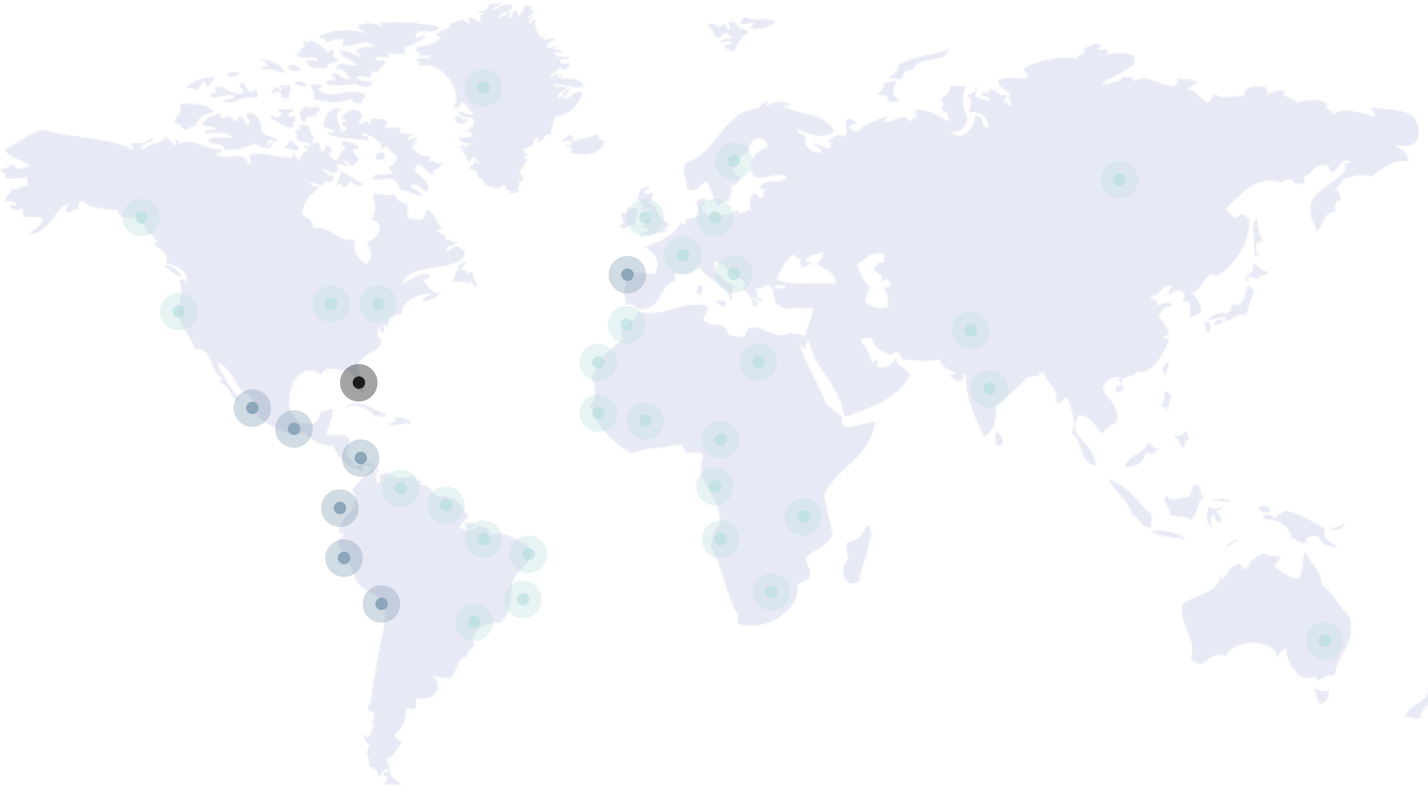
MIU City University Miami is part of PROEDUCA Universities, a leader in online education with over 15 years of experience. With more than 108,000 students across 90+ countries and a team of 3,000 highly qualified professors, we offer a proven learning system based on academic excellence and accessibility.
Countries
Students
Years of Experience

Request information
To apply for this master's program, you must hold a bachelor's degree.
$7,000*
$167 per credit