

Master’s Degree in Educational Leadership, Management, and New Technologies
Step into leadership roles in education, design innovative strategies, and inspire both students and educators to create a promising future.
Apply for a scholarship


Start date January 2027

US Degree Accredited

Language English

Duration 18 months (5 semesters)
Become an educational leader driving technical innovation
This Master’s Degree in Educational Leadership prepares you to lead innovative projects and adapt institutions within a constantly evolving sector. You will learn how to integrate new technologies and guide teams with a strategic mindset; skills that stand out in today’s job market.
You will also develop strong analytical and problem-solving capabilities to identify weaknesses in current educational initiatives and propose practical, impactful solutions. You will strengthen core competencies, such as communication, critical thinking, strategic management, and decision-making, through a balance of theory and real-world application.
Upon completing this fully online program, you will be ready to plan and coordinate human resources initiatives, bringing together professional skills with individual strengths across your team. It is a strong fit for those looking to take on leadership roles and shape the future of education with a U.S.-accredited degree.
What will you learn with a Master’s in Educational Leadership, Management, and New Technologies?
This program allows you to explore different leadership models and how to apply them, as well as strategies for collaborative administration, change management, conflict resolution, and the use of emerging technologies in education. You will become a leader capable of designing and managing programs that improve the educational experience of both teachers and students. You will be able to:
- Deepen your knowledge of the education sector, its challenges, and its potential.
- Understand how to use new technologies in institutional management.
- Develop efficiency in the planning, management, and execution of innovative projects.
- Gain deeper knowledge of leadership and administrative roles in educational institutions.
- Learn about new methodological trends and strategies for proper educational management.
- Adapt new knowledge to achieve pedagogical goals and support ongoing teacher development.

Why earn a Master’s in Educational Leadership degree from MIU?
Earning your Master’s Degree in Leadership and Management will boost your professional career and prepare you to lead in today’s education sector. Studying with MIU also gives you access to the following:
- A U.S.-accredited degree that meets the demands of the U.S. and global market.
- Access to high-quality networking that connects you with students from around the world, expanding your horizons and increasing your opportunities.
- A flexible methodology that includes onboarding, personalized tutoring, live and recorded classes, around-the-clock technical support, and access to all our online resources.
- Affordable, barrier-free pricing that makes quality education accessible.

Format
MIU offers a 100% U.S. master’s degree program to give you maximum flexibility. You can study from anywhere in the world.
Online
Tuition
Per credit
Fees
Start date
January 2027
Language
English
Duration
18 months (5 semesters)
Application fee
- Domestic Students: 50 USD/ for International Students:150USD
- Foreign Credential Evaluation (FCE): 150 USD
- Graduation Fee: 400 USD
(*) Does not include the graduation fee (USD 400)
Highlights
- Accredited by DEAC.
- Live and recorded classes.
- Maximum flexibility.
- Classes in English.
- U.S. degree.
Scholarships
See all the scholarships we have available for those who qualify, along with our no-interest payment plans. If you have any questions about your personal situation, we are here to help.

Study Plan
36 Credits
Our Master’s in Educational Leadership Program is structured into 5 semesters (18 months), which culminate with a 6-credit capstone focused on applying the knowledge you have gained to a real-world initiative. The program is designed to combine theoretical foundations and practical skills development in leadership, change management, and technology.
1st semester
Leadership and Change Management in Education
3 Credits
Innovation, Quality, and Educational Models
3 Credits
Organization and Strategic Management of Educational Institutions
3 Credits
2nd semester
Organizational Structures and Curriculum
3 Credits
Styles and Approaches in Leading and Managing Change: International Case Studies
3 Credits
Managing Conflict, Power and HR Policies
3 Credits
3rd semester
Emerging ICT Trends and Socio-Cultural Changes in Education
3 Credits
Human Resources Management
3 Credits
4th semester
Leadership and Business Information Systems
3 Credits
Design and Development of New Educational Products/Services
3 Credits
5th semester
Leadership Management Capstone Project
6 Credits
Última revisión realizada: 14/09/2026
This course will focus on individual, team, and organizational leadership and will provide you with the foundation for examining and developing your own individual leadership style. The work of a leader is to constantly look forward and provide the necessary changes for the organization, being the visionary is critical to success in any organization, and a key attribute for any organizational leader. As a result, this course will focus on Leadership and Change Management. In doing so, your role as a change agent will be a focus of the course. Understanding various methods of bringing about change will be provided and researched by you, and then discussed in our time together. The course will also delve into and explore numerous aspects of leadership including but not limited to horizontal and vertical leadership, formal and informal leadership, team leadership, performance, ethics, and authenticity. In addition, various models of change will be introduced and explored.
Course Outcomes:
-
You will be reinforced in the knowledge and understanding of the different ways a leader can promote an educational institution to the community.
-
You will be assessed in the ability to identify challenges in managing change and helping people navigate through it.
-
You will be able to master the strategies for managing the daily demands of leadership: conducting meetings, managing conflict, time management, negotiation, and communication.
-
You will be introduced to the nature of leadership and the hallmarks of effective leadership.
Última revisión realizada: 14/09/2026
The course provides you with a complete knowledge of educational innovation in the fields of the direction and management of educational centers. The final objective of the course is to train you to analyze the need to implement innovation projects, design these projects and examine their possible impact on the school. To do this, we start from the analysis of different educational systems, the keys to school success and the understanding of the concept and implications of educational innovation in today’s information society. Different current ways of thought on the need for change are also examined through the development of innovative actions.
The course allows you to deepen in the conditions, agents and elements involved in the development of innovation in a school, especially in the role of teachers, the relationship between innovation and leadership, and the organizational and institutional determinants that affect educational innovations. The important role of the digitalization of information and communication is emphasized to increase the success of teaching-learning processes and the incorporation of elements that allow the development of virtual teaching-learning environments as key innovative actions in the information society.
The implementation and analysis of the innovation process is framed and related to educational research based on action in real educational contexts. On the other hand, it aims for you to be able to lead and develop quality and improvement programs in schools with an orientation towards excellence.
At the same time, it addresses theoretical-practical postulates related to the field of quality in education, empowering you for the analysis, reflection and areas of application of the different options for improvement and innovation that allow the implementation of a quality culture in educational centers and the role of evaluation in these improvement processes.
For this, an approach to the concept of quality in education and quality of education is proposed through the planning being an essential element for the implementation of quality processes and the relationship between quality orientation and the promotion of innovation. On the other hand, content is presented for you to access the knowledge necessary to diagnose, design and implement improvement proposals, knowing and analyzing a wide range of perspectives, tools and resources.
Course Outcomes:
-
You will be reinforced in the concept and implications of educational innovation in today’s information society.
-
You will be introduced to the role of digitalization of information and communication with a focus on teaching-learning processes.
-
You will master the implementation of innovation projects and assess the impact analysis of your innovation projects. This will be accomplished through the design of innovation projects and examination of their possible impact on the school.
Última revisión realizada: 14/09/2026
Management that provides a unique identity, acting as facilitators in the structure of educational complexity. The purpose of this course is to determine the facilitating agents and processes of said complexity, for which the acquisition of knowledge related to school organization and the effective management of educational institutions is essential. Therefore, it is unfailing to address content related to the directive and managerial function in the organization of a school, the strategic management of educational institutions as well as the directive function (the director and his or her teams), which help in the tasks of leadership and management of educational centers. On the other hand, the planning, coordination and management control structures will be analyzed, as well as the documents that help to this end and that will develop tools, in themselves, for evaluating centers. Finally, it is considered necessary to achieve knowledge related to the most relevant organizational aspects in these institutions, where space, time and teaching coexistence are framed, as well as the strategies that determine planning, development and evaluation that facilitate counseling in the educational orientation, allowing the development of tools and value indicators of the entire educational community.
Course Outcomes:
-
You will be introduced to the current education legislation and regulations, in the national and international frameworks, and be able to implement them appropriately in the management of educational institutions.
-
You will master the differentiation of methodological alternatives to enable a collaborative management, enhancing cooperation and participation in educational institutions.
-
You will reinforce your knowledge related to directive and managerial processes in educational institutions to be able to understand and develop strategies and procedures for organizing, planning, performing, supervising and assessing results in the scope of educational institutions.
-
You will reinforce the analysis of fundamental abilities and skills in order to encourage coexistence in a variety of educational environments, and be able to deal efficiently with potential conflicts.
Última revisión realizada: 14/09/2026
This course will focus on the role and responsibilities of a leader as an ethical role model, decision-maker, and teacher. You will review and analyze current ethical issues for professional learning communities. Through the use of case studies and a problem-based approach to learning, you will have an opportunity to analyze and develop your decision-making skills within the context of an ethical and moral framework.
Course Outcomes:
-
You will be introduced to the role and responsibilities of a leader as an ethical role model, decision-maker, and teacher.
-
You will be reinforced in the analysis of current ethical issues for professional learning communities, using case studies and a problem-based approach to learning.
-
You will master the ability to analyze and develop your decision-making skills within the context of an ethical and moral framework.
Última revisión realizada: 14/09/2026
This program is designed to help you develop a framework for change within the context of your own organization. Throughout this program, you will progress from analyzing your change initiative, through the design of a framework for change, to developing a unique model for accelerating the process in your organization. This course examines how and why individuals and organizations resist change, and the skills that you, as a leader, need to overcome these obstacles. It combines different educational approaches to provide you with an in-depth understanding of the importance of talent development to organizational success.
Course Outcomes:
-
You are assessed in how to analyze a change initiative, through the design of a framework for change, to developing a unique model for accelerating the process in your organization.
-
You are reinforced in how and why individuals and organizations resist change, and the skills that you need to overcome these obstacles.
-
You are introduced to different educational approaches to manage change, providing you with an in-depth understanding of the importance of talent development to organizational success.
Última revisión realizada: 14/09/2026
This course focuses on the different processes that are available for resolving conflict, including negotiation, conciliation, mediation, arbitration, litigation, facilitation, and collaborative and restorative justice processes. You will consider the differences between the various processes and develop the capacity to evaluate which process is most suitable for a particular conflict situation. It also considers the ethical issues that may arise in managing and resolving conflict in a wide range of contexts. You will learn about a range of ethical decision-making processes.
Course Outcomes:
-
You are introduced to different processes for resolving conflict, including negotiation, conciliation, mediation, arbitration, litigation, facilitation, and collaborative and restorative justice processes.
-
You will master the evaluation and decision of which processes are most suitable for a particular conflict situation.
-
You are reinforced in a range of ethical decision-making processes.
Última revisión realizada: 14/09/2026
While many organizations have outsourced the design of production systems, there is still a need for you to provide specifications for those systems. In addition, the recent Internet and e-commerce explosion has created an even wider need for you to design corporate websites. Organizational practices must exist to make sure designers and developers take into account what you know about human factors engineering. This course focuses on how you gather requirements, achieve a usable first draft, and test and improve that draft. A half-dozen course projects include usability critiques, assessments of users’ difficulties in understanding systems, and designs of forms, screen layouts, and icons.
Course Outcomes:
-
You will master the use of ICT in the classroom in the context of modern pedagogical principles.
-
You are introduced to the use of mobile devices as support for the attainment of educational objectives.
-
You are reinforced in the value of critical thinking when using Internet resources.
-
You are introduced in the application of the flipped classroom methodology using ICT tools.
-
You are reinforced in the use of assessment in the classroom using digital technologies.
-
You are introduced to the concept of gamification and understand its use in educational settings.
Última revisión realizada: 14/09/2026
The analysis of the relationship between people and their jobs is a very important issue, because of its scientific, business, and ethical dimensions. Human beings represent, according to the organization’s needs, one of the main sources of competitive advantage and a successful strategic factor for business. Starting from the most recent technical and cultural orientations about human resources management, the course deeply analyzes your role within complex organizations, aiming at the acquisition of specific competences for human resources management as a strategic resource in the development and organizational learning paths. The program is structured in two modules: the former deals with the management tools for the competences assessment; the latter deals with the analysis of the organization.
Course Outcomes:
-
You will gain a reinforced understanding of the relationship between organizational strategy and human resources strategy.
-
You will be reinforced in the ways in which the human resources function helps the attainment of organizational goals.
-
You will be introduced to the concept of competencies and understand its role in human resources management.
-
You will be reinforced in how training and development can be managed, planned, and implemented.
-
You will master the ways companies set objectives for their employees and how to assess performance based on these objectives.
Última revisión realizada: 14/09/2026
The course focuses on both leadership and change management providing you with the foundations for examining and developing your own individual styles. The work of a leader is to constantly look ahead and to provide the changes that are necessary for the organization to keep abreast of the evolution of its environment. An intelligent foresight is critical to success in any organization and a key attribute for any organizational leader. Your role as a change agent will therefore be the focus of the course. Providing both theoretical frameworks and practical examples will enable your understanding of how change can be initiated and implemented. The latter are drawn from two cases that are explained in-depth during the lessons. You can study them and then comment on them in our time together. The course investigates different kinds of leadership such as transactional, transformational, and distributed leadership. It addresses key issues concerning leadership building in organizations and teams, performance management, and knowledge sharing.
Course Outcomes:
-
You will be reinforced in the understanding of the role of leadership in creating a positive and safe environment towards the well-being of the employees.
-
You will master the concept of psychological capital and understand how it can be used to foster psychological health at the workplace.
-
You will be introduced to legal principles that guide health and safety in the workplace.
-
You will be reinforced on the main physical risks for health and safety in the workplace and how to create plans for safety and well-being.
-
You will be introduced to the psychosocial risks in the workplace and how to minimize them.
-
You will be reinforced in the concepts of burnout and engagement and ways to foster engagement while reducing burnout.
Última revisión realizada: 14/09/2026
The objective of this course is to examine basic areas such as recruitment, career development, performance appraisal and rewards, job design. It will also explore current issues of diversity and identity at work, the role of unions, and the changes occurring within the organizational environment. Discussions will include practices among the public, non-profit and for-profit sectors. Areas will include administrative supervision techniques for educational institutions, administrative office, public, and private organizations, and associations. Topics include skills needed for planning, organizing, staffing, directing and controlling, communicating, motivating, decision-making, priority setting and time management leading toward effective objectives and organizational goals.
Course Outcomes:
-
You will be introduced to the concept of Human Resources Information Systems management.
-
You will understand the types of assistance the Human Resource Department provides.
-
You will have a reinforced understanding of the relationship between human resource managers and operating managers.
-
You will master how human resource managers can affect organizational performance and the role of human resource managers in the future.
Última revisión realizada: 14/09/2026
This graduate course emphasizes practical research skills utilized by education practitioners. You will develop an action research project based on the scientific method and concepts. The culminating product will reflect critical thinking, graduate level writing skills, and correct APA format. This course is open only to students pursuing the Education Leadership Management.
Prerequisite(s): You are required to complete all other program credits before registering for the capstone project course.
Course Outcomes:
-
You will be introduced to academic research through the preparation of an applied thesis that will follow the current MIU guide to prepare said document.
-
You will be reinforced on the presentation of the research methodology, clearly explaining the research design, the sampling strategies, the instruments used, the methods of data collection and data analysis.
-
You will master the formal presentation and defense of your research as evaluated by the faculty jury members.
-
You will be reinforced on the use of APA style formatting in the creation of an academic research thesis.
Lead in learning with educational technology
This program will teach you to incorporate emerging technologies and digital strategies to transform teaching and enhance learning experiences. You will build skills in emotional intelligence, time management, motivation, resilience, and change management. At the same time, you will gain hands-on experience with the following tools and approaches.
- Core tools: You will learn to use and get the most out of applications like Microsoft Sway, Nearpod, Socrative, Thinkling, Genially, Trello, Edpuzzle, and Notion, to create multimedia resources, gamified activities, and digital assessments.
- Educational innovation and technology leadership: You will apply models such as augmented reality, 3D printing, gamification, and mobile learning (m-learning) to design interactive experiences and support a digital-first teaching approach.
- Digital competency and inclusive education: You will be prepared to lead through innovative practices and adapt content to different learning styles and needs using digital technologies.




5 Stars in the QS Ranking
At MIU City University Miami, we hold a 5-star distinction in the QS Stars ranking, which endorses the quality of our online education, our practical approach, and our commitment to the professional development of our students


Career Opportunities for the Master’s Degree in Educational Leadership, Management, and New Technologies
The integration of new technologies has influenced every sector, including education. That means educational institutions need new models capable of understanding today’s evolving technological landscape and taking advantage of new tools to transform academic experience. This program prepares you for roles that include:
- High school principal or educator: implement innovative strategies and integrate new technologies effectively.
- E-learning project director: lead online learning initiatives using modern technologies.
- Public or private school administrator: manage institutions and adapt their goals and needs.
- Corporate training director: design professional development programs for educators.
- Education manager: oversee institutions and ensure educational quality across systems. You will also have the skills to oversee public education policies and improvements to the system.
- Management of educational institutions
- Change management and educational models
- Design of educational innovation projects
- Integration of emerging and digital technologies
- Conflict resolution and effective negotiation
- Ethical decision making
- Management of professional learning communities
- Teacher professional development planning
- Data-driven decision making
(*) Source: U.S. Bureau of Labor Statistics (BLS). Median annual wage in the U.S. for high school teachers.
(**) Source: U.S. Bureau of Labor Statistics (BLS). Projected employment growth (2024–2034) for high school teachers.
AVERAGE SALARY
EMPLOYABILITY
Frequently Asked Questions
Our approach combines traditional administrative practices with the strategic use of artificial intelligence and the emotional well-being of educators to prepare them for the challenges educators face today.
Yes, the program is 100% online and asynchronous for busy professionals who need flexibility while still having access to experienced mentors.
The program equips you with the skills that administrative leadership and technology-focused roles demand, following recognized standards that support professional mobility across the United States.
MIU offers one of the fastest programs available in the United States, as this degree can be completed in as little as 12 months.
Options include policy consulting, instructional design, and leadership positions within corporate training and learning and development teams.
Yes. Students become part of an international network of education leaders, and we offer personalized support to help our graduates enter the U.S. job market.
MIU City University Miami is licensed by the Florida Commission for Independent Education and holds accreditations that reflect the highest standards of academic quality.
While other programs focus only on tools, MIU prepares leaders to guide the ethical use of AI, manage data responsibly, and support personalized learning at the institutional level.
Admission Requirements
To enroll in our online Master’s in Educational Leadership, Management, and New Technologies program, you must provide the following:
- Bachelor’s or master’s degree diploma
- Copy of passport or national ID
- Completed application form
- Current resume
- Proof of English proficiency (required if you enroll in an English‑taught program)*
(*) If you live outside the U.S. or your native language is not English, please refer to the guide here for the relevant steps and assessments.

Experience that inspire
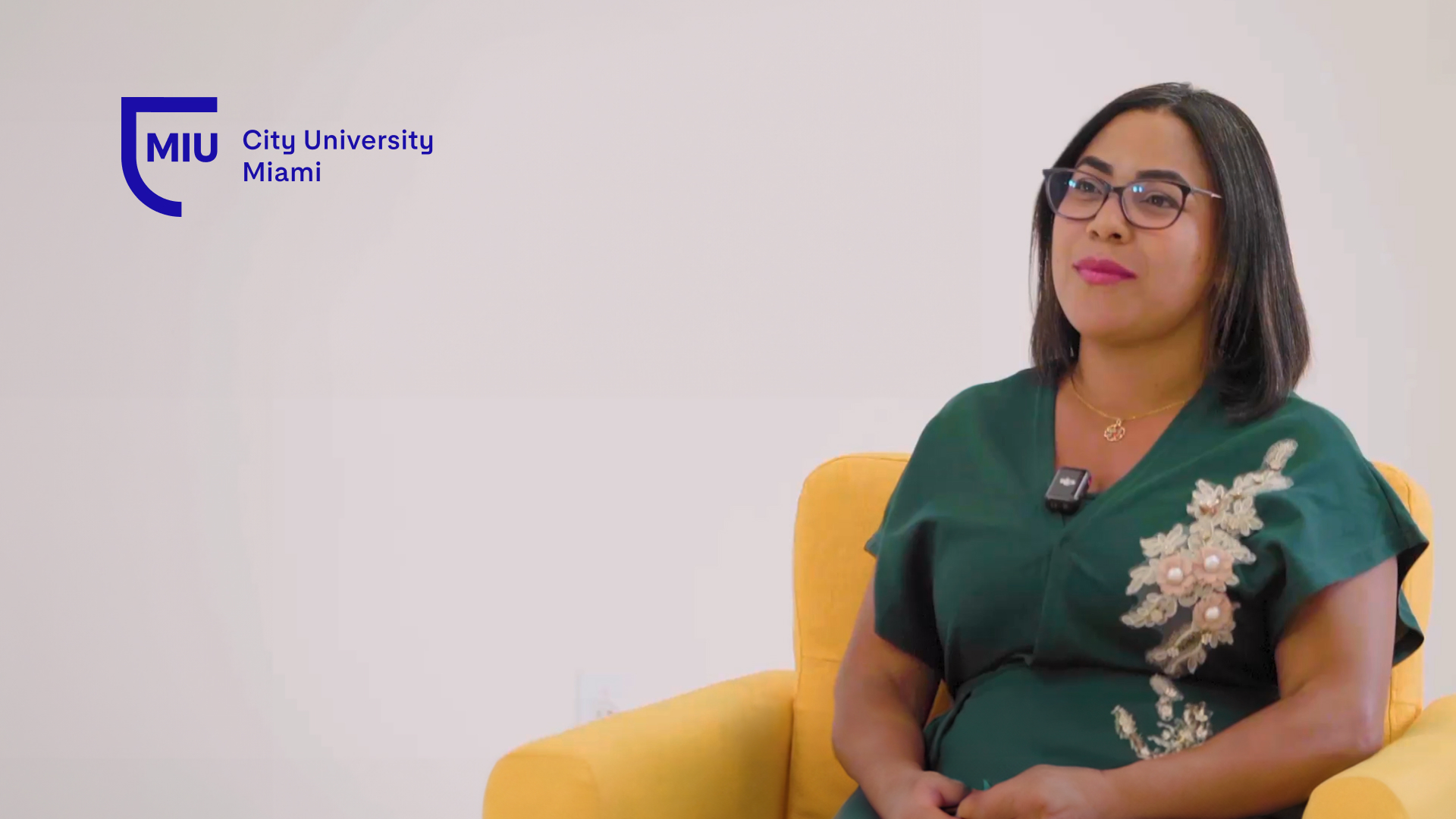
Melina Gross
Master’s Degree in Educational Leadership, Management, and New Technologies
MIU Success Stories
Discover how Melina Gross, a graduate of the Master’s in Educational Leadership, Management, and New Technologies, transformed her career and future with MIU.
Learn about the experience of our graduates

The Master’s in Educational Leadership at MIU has been transformative, helping me combine my social work background with administrative skills to lead schools focused on equity, student support, and staff well-being.

In my first year at MIU, I’ve enjoyed supportive tutors, knowledgeable professors, and manageable assignments that help me grow personally and professionally.

Being at MIU has greatly contributed to my development as an educator and aspiring leader. The knowledge gained has strengthened my commitment and prepared me for future leadership roles.
And get specialized:
Expand your knowledge and stand out from the competition with our Continuing Education Courses. MIU’s Continuing Education Courses do not count as university credits and are not transferable to other academic programs. They are designed solely for professional development and personal enrichment.

Artificial Intelligence in Education
Lead an educational transformation with AI, integrating it ethically to enhance learning and academic management.

Corporate Finance
Optimize your company's financial management to gain a competitive edge.

Emotional Intelligence and Positive Discipline
Support your students’ talents and help them grow.

Strategic Management and Organizational Leadership
Develop the emotional intelligence and decision-making skills needed to lead high-performing teams successfully.
Key dates
- Fall semester: September – December
- Enrollment: August
- Spring semester: January – May
- Enrollment: December
- Summer semester: May – August
- Enrollment: April

Licenses and Authorizations
DEAC (Distance Education Accrediting Commission)
MIU City University Miami is accredited by the DEAC. The Distance Education Accrediting Commission is recognized by the Council for Higher Education Accreditation (CHEA).

State License
MIU City University Miami is licensed by the Commission for Independent Education, Florida Department of Education, under license number #5359.

Career Advancement for Educators
Career advancement frameworks in education play an important role in supporting long-term professional growth. They recognized your experience, academic background, and performance, while creating opportunities to take on new responsibilities and expand your impact in leadership roles.
As you progress, you may also see increased earning potential and stronger professional stability. Advancing within these structures can open doors to new opportunities, helping you build a more defined career path over time. It is a system that values commitment and encourages continued development throughout your career.
Explore how this works by country:

A Leader in Online Education
MIU City University Miami is part of PROEDUCA Universities, a leader in online education with over 15 years of experience. With more than 108,000 students across 90+ countries and a team of 3,000 highly qualified professors, we offer a proven learning system based on academic excellence and accessibility.
Countries
Students
Years of Experience


Request information
To apply for this master's program, you must hold a bachelor's degree.
$7,000
$194 per credit