

What Is a KPI and How Do You Use It in Business?
You need to have a plan, and you also need a way to determine if the plan is working. That’s why many businesses use KPIs. But what is a KPI exactly?
KPI stands for key performance indicator, which is a measurable value that shows businesses how effective their strategies are at moving them toward a goal. Tracking the right KPIs means organizations can make more informed decisions and adjust their strategies if they need to.
Students in MIU’s Master’s Degree in Business Intelligence learn how to analyze data, build dashboards, and use key performance indicators to support strategic decision-making.
What is a KPI (key performance indicator)?
Imagine a company wants to increase its sales this year. If that’s the case, one of its KPIs could be monthly revenue, since that would clearly indicate whether they’re headed in the right direction.
So, what is a KPI in a business team that has been assigned the objective of improving customer satisfaction? Customer satisfaction scores would be a logical answer.
Why is it essential to measure performance in a business with KPIs?
Not monitoring KPI metrics could end up costing a company time and resources on strategies that aren’t actually pointing them toward success. Tracking KPIs means that organizations can do the following more successfully:
- See whether or not they’re progressing toward their goals.
- Identify problems before they become more costly.
- Stop guessing and build strategies based on real data.
- Keep teams focused.
- Measure the impact of changes over time.
What are the main types of KPIs?
Quantitative vs. qualitative
Quantitative key performance indicators measure numerical results. That could be revenue, the number of conversions obtained from an email campaign, or employee attendance, depending on what an organization’s goals are. Those results are all easy to measure with numbers.
Qualitative KPIs are focused on areas like customer satisfaction or employee engagement, which aren’t strictly numerical. To measure them, businesses can use surveys or other kinds of feedback.
Leading vs. lagging
Leading KPIs let businesses know where they’re likely to end up if current trends continue. For example, if they’re seeing an increase in qualified leads today, that’s a sign that they could see increased sales in the not-too-distant future.
Lagging KPIs do the opposite because they measure results that have already been achieved.
Using both together gives businesses a more complete picture of where they might be headed and what they’ve already accomplished.
Strategic vs. operational
Strategic KPIs have to do with long-term goals, and operational KPIs focus more on day-to-day objectives.
Examples of strategic KPIs would be measurements like profit margin, revenue growth, market share, and percentage of revenue from new markets.
Monitoring whether tasks are being completed on time or production is staying on track are both examples of operational KPIs.
Strategic and operational KPIs are two different things, but they’re strongly connected, since keeping things running smoothly on a daily basis contributes to long-term success.
What are some KPI examples by area?
Marketing KPIs
Teams use marketing KPIs to evaluate whether their campaigns are producing the business results they’re looking for. If you’re wondering what a KPI in marketing is, here are some examples:
- Website conversion rate (how many customers complete a desired action)
- The cost of acquiring a new customer
- Advertising return on investment
- The percentage of email recipients who click on a link in the email
- Number of potential customers who request more information
Sales KPIs
If you’re wondering what a KPI in sales is, common examples include the following:
- Monthly revenue
- Growth in sales
- The average value of each sale
- The percentage of leads that end up as customers
- Number of repeat customers (retention rate)
These are all indicators that help managers forecast performance and uncover opportunities to improve their sales process.
Financial KPIs
Examples of KPIs that financial teams find useful are the following:
- Profit margin
- Cash flow
- Revenue growth
- Operating costs
- Return on investment (ROI)
What is a KPI in project management? To assess how well a project is staying on schedule and within budget, project managers can use KPIs. And what is an example of a KPI? Common examples are the percentage of on-time tasks and the number of project milestones achieved.
What is the difference between a metric, a KPI, and an OKR?
Metrics, KPIs, and OKRs serve different purposes, even though people often use the terms interchangeably.
A metric is any piece of information that’s measurable, such as website visits or employee attendance. It’s a broad term. What is the difference between a KPI and a metric? The meaning of “KPI” is narrower since it’s a metric that directly measures progress toward an important business goal.
OKRs, or Objectives and Key Results, aren’t metrics. Rather, they’re a framework for setting goals. They define what businesses want to achieve and how they’ll measure their success. Organizations often use both together. OKRs define what an organization wants to achieve, while KPIs measure progress toward those objectives.
How to define good KPIs with the SMART method
Before choosing key performance indicators, organizations need to define exactly what their goals are. According to the Balanced Scorecard Institute, “If you don’t know what you’re trying to accomplish, it is too early for KPIs!” Businesses can follow the SMART framework, which means that a KPI should be Specific, Measurable, Achievable, Relevant, and Time-bound.
Source: How to Develop KPIs / Performance Measures
It’s not enough to state “increased sales” as a business goal. Rather, an effective KPI would look something like this: “increase monthly online sales by 15% during the next 12 months.” This makes expectations clear, realistic, and easier to assess.
What is a KPI report and dashboard?
What is a KPI report? It’s a performance summary for a specific period of time, which could be a week, month, quarter, or year. KPI reports tell you whether or not you’re meeting your goals and where you might need to make some adjustments.
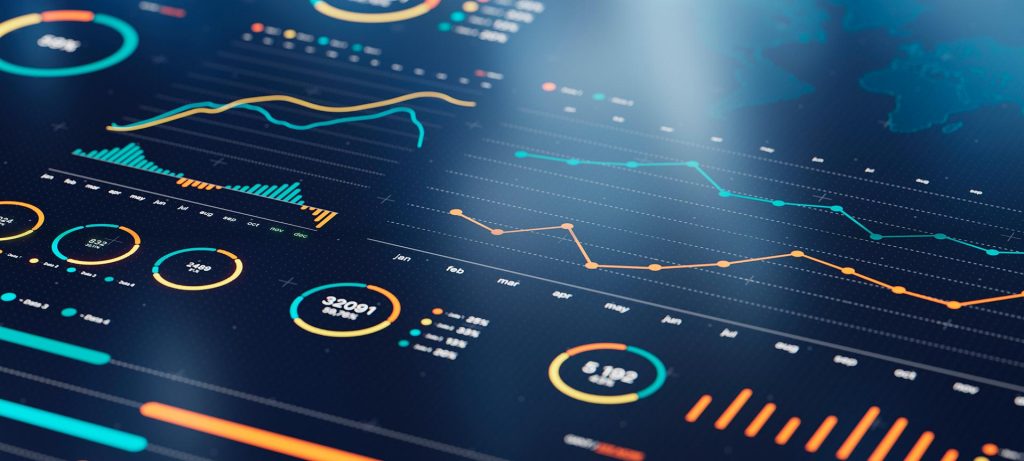
What is a KPI dashboard? It provides the same information, but in visual format, with charts and graphs. So, KPI dashboards let you monitor results more easily and spot important changes or problem areas at a glance instead of having to comb over reports and spreadsheets.
How to master KPIs and business intelligence with a master’s degree
Businesses are generating more data than ever, but data alone doesn’t guarantee they’ll make better decisions or achieve more success. They need professionals who know how to analyze all that data and turn it into clear insights.
MIU’s Master’s Degree in Business Intelligence helps students develop practical skills and gain experience in data analysis, reporting, dashboard design, and business intelligence tools while they learn how to identify meaningful KPI metrics, evaluate business performance, and support strategic decision-making.
References
Balanced Scorecard Institute. (n.d.). How to develop KPIs / performance measures. KPI.org. https://www.kpi.org/KPI-Basics/KPI-Development/
Balanced Scorecard Institute. (n.d.). What is a key performance indicator (KPI)? KPI.org. https://www.kpi.org/KPI-Basics/
Microsoft. (n.d.). What is business intelligence? Microsoft. https://www.microsoft.com/en-us/power-platform/products/power-bi/topics/business-intelligence
Microsoft. (n.d.). What is Power BI? Microsoft Learn. https://learn.microsoft.com/en-us/power-bi/fundamentals/power-bi-overview
See more articles related to Blog

Created on: 06/11/2026
What Is EdTech and How Is It Transforming Education?
Your teacher reviews your group’s progress, sees how each student is contributing, and provides feedback, all on the same platform. […]
Blog

Created on: 13/10/2026
What Is an F-1 Visa and How Can You Apply for It?
For most students that’s an F-1 student visa. It’s the most common student visa for international students who want to […]
Blog

Created on: 06/10/2026
What Is an Investment Banking Analyst and What Do They Do?
Among those professionals are investment banking analysts, entry-level professionals who support senior bankers behind the scenes during major financial transactions. […]
Blog